
Behind the Stitch: Why Chemical Standards and Upcycling Define Mabel Green Studio


At Mabel Green Studio, every single item created on our sewing machines begins with a question: Is this material truly safe—for our planet, and for you?
If you have caught any recent documentaries highlighting consumer chemical safety, you might already know that the world of textile production can be a minefield. Many of us are waking up to the reality of the toxic chemicals, unstable plastics, and unregulated synthetics that flood the global market.
But as an independent maker based right here in England, I want to pull back the curtain on how Mabel Green Studio does things differently—and why our geographical home gives us a major advantage in keeping things clean.
The UK & European Advantage: Safety by Design
It is a common question: if textile safety is a global issue, does it really matter where a business is based?
The answer is a resounding yes.
In the UK and Europe, our textile and chemical laws operate under a strict framework known as the "Precautionary Principle" (via systems like UK REACH). This legislation mandates that chemicals must be rigorously proven safe before they can legally be used on fabrics sold to consumers. In contrast, other major global markets—including the United States—frequently operate on a post-market system. This means chemicals are often only restricted or banned after they have been conclusively proven to cause harm.
When you buy a mass-produced item imported from unregulated global supply chains, you could inadvertently be bringing hidden toxins, heavy metals, or harmful formaldehydes into your home.

Finding Peace of Mind: Our Oeko-Tex Standard
Because my business is anchored by strong ethical choices, I refuse to guess when it comes to your health. That is why the materials used for our utility accessories, like our travel wash bags, are chosen with extreme care.
Our washbags are crafted from vintage textiles, including cotton barkcloth, alongside a range of beautifully made French oilcloth travel accessories that proudly carry the Oeko‑Tex STANDARD 100 label.
For a fabric to earn this independent European certification, every single component—from the base weave to the waterproof coating—must undergo strict laboratory testing. It is your absolute guarantee that the material is 100% free from over 1,000 known toxic substances, harmful phthalates (plasticisers), and skin irritants. It represents the highest possible tier of consumer fabric safety available today.

Giving New Life to Forgotten Fabrics: The Reworked Shirt
While sourcing certified new fabrics is one way to ensure safety, the most sustainable fabric on earth is the one that already exists.
There is a massive greenwashing trend in fashion right now pushing "recycled plastic bottles" as an eco-miracle. But as independent data from the Plastic Detox Closet 101 Guide points out, recycled polyester (rPET) still sheds the exact same microplastics into our waterways as virgin plastic with every single wear and wash. It simply delays that plastic from entering a landfill.
Closer to home, campaigns by British environmental charities like the Friends of the Earth Microfibres Guide highlight that these tiny synthetic fibers easily bypass our domestic waste treatment plants, directly polluting our local UK rivers and marine life.
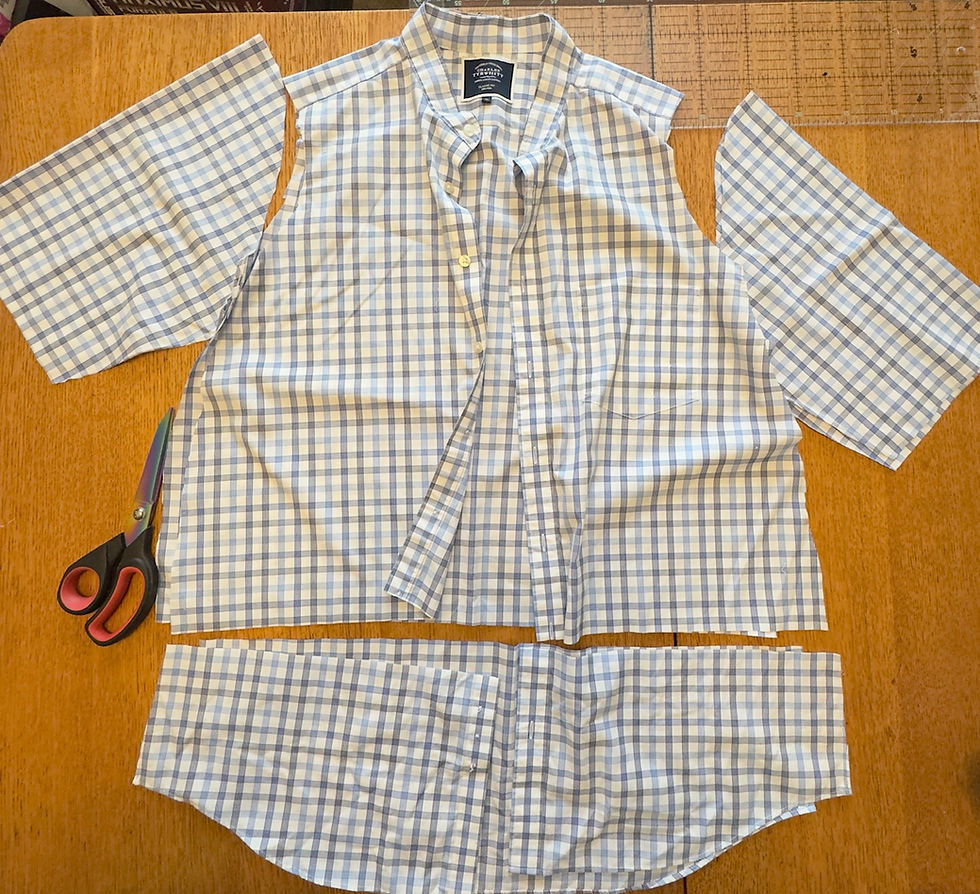
That is why a core passion at Mabel Green Studio is reimagining true deadstock, remnants, and pre-loved textiles rather than relying on recycled synthetics. One of our favourite ways to do this is by taking 100% cotton men’s shirts—which are incredibly high quality but often discarded due to minor styling shifts—and completely reworking them into something entirely new.
Here is a quick truth bomb: I intentionally hunt for shirts in XXL sizes. Why? Because larger shirts offer far more physical fabric, allowing me the yardage needed to make bold, dramatic design choices like structural ruffles and fluid drapes. Sometimes, these pre-loved shirts contain a small polyester blend. While I love working with 100% natural cotton, rescuing an existing XXL shirt means that fabric is actively being kept out of a landfill. Extending the lifecycle of a garment that already exists will always be a major victory for our planet.
By restructuring the traditional lines of menswear, we sculpt these shirts into highly feminine, romantic blouses. It is a slow, methodical process that rescues premium textiles, honours the craftsmanship of the original weave, and provides you with a truly unique piece of wearable art.

The Reality of '100% Sustainable'
I want to be completely transparent with you: in today’s world, no business can claim to be 100% sustainable — and Mabel Green Studio is no exception. Creating these pieces means using domestic and industrial sewing machines that run on electricity. Sourcing remnants sometimes requires travel or relying on the postal system. And getting your order safely to your doorstep depends on the wider delivery network.
True sustainability isn't about achieving a flawless, zero-impact existence—it is about making the absolute best choices available at every single step. For instance, while shipping requires transport, I choose to send our parcels via the Royal Mail because they boast the UK's lowest reported carbon footprint per parcel for domestic delivery, thanks to their massive "feet on the street" walking delivery network.
Perfection might be a myth, but doing our best is a non-negotiable promise. By balancing industrial longevity with circular fabrics, we ensure your items are built to last a lifetime.
Made Honestly, Made Locally
When you support a small studio like ours, you aren't just buying a bag or a blouse. You are supporting a cleaner textile economy. You are choosing professional, industrial-grade construction, toxic-free certifications, and a circular approach to fashion.
Thank you for being part of the journey to make our wardrobes—and our homes—just a little bit safer, cleaner, and more beautiful.
P.S. A Stark Reminder in UK Waters (August 2026)
As I write this, a devastating reminder of our global plastic crisis is unfolding right on our doorstep. Following a major ship collision at the Port of Tyne on 19 July 2026, over one billion raw plastic manufacturing pellets (known as 'nurdles') have spilled directly into British waters.
These tiny pellets are the exact raw material melted down globally to make mass-produced synthetics and plastic items. Right now, millions of them are washing up across North East beaches, threatening marine life and prompting thousands of local volunteers to spend their mornings manually sieving them from the sand.
You can read the full, unfolding story on the BBC News River Tyne Environmental Disaster Report. It is a heartbreaking reminder that our reliance on mass-produced plastics carries an environmental cost long before it ever reaches a retail shelf. Every time we choose pre-existing, upcycled textiles over new synthetics, we are actively voting for a cleaner future.


Comments