
Craft vs. Code: Why Our Slow Fashion Studio Uses AI Fashion Images

Welcome to an open, honest conversation about the use of modern technology and independent British craftsmanship, framed under the direct question: Craft vs. Code: Why Our Slow Fashion Studio Uses AI Fashion Images.
At Mabel Green Studio, the philosophy of slow craft dictates how we look at every element of our production, from the rescue of a vintage cotton twill to the final zipped opening on a custom washbag. When building a contemporary brand rooted in reuse, every single decision must stand up to environmental, economic, and ethical scrutiny.
Across our digital galleries and online storefront, we utilise advanced digital imagery to bring our collections to life. For an independent sole trader, navigating the world of generative technology requires a delicate balance. We know that digital servers carry an undeniable data and energy footprint—a reality that any truly conscious brand must acknowledge. It's a very new landscape, we don't fully know where it's going, and the long-term impact is still unfolding.
But as a solo maker, we have to practically weigh the positives against the negatives. This technology is here to stay, and our responsibility is to use it wisely.
Sewing at the Bernina 1130 sewing machine 
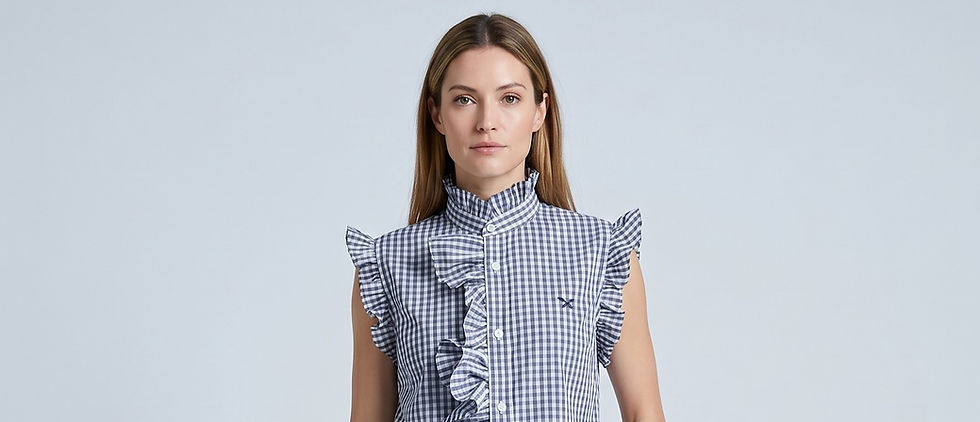
One of our reworked shirts worn by an AI generated model
The Logistical Illusion of the Industry
To look at a luxury fashion spread in a magazine, or to browse a beautifully styled online campaign of an established corporate house, is to witness a massive, invisible engine of capital and physical consumption.
For a major brand, a single day’s photography campaign demands an overwhelming list of requirements: a professional model, a creative director, a dedicated stylist, a makeup artist, a photographer, and a digital post-production editor. Every single one of those individuals must travel—generating significant transport emissions. They may use single-use cosmetics, transport heavy specialist lighting rigs, rent physical studio spaces, or travel to remote outdoor locations while hoping the volatile British weather remains kind.
The monetary cost of a single professional campaign shoot easily runs into thousands of pounds. For a small, independent workspace in South Manchester, that barrier to entry is completely insurmountable. We quite simply have no way of affording that level of corporate production. Faced with this, a solo maker has two choices: compromise on the visual presentation of their hard work, or find a resource-saving alternative.

A Tool for Practical Preservation & Radical Transparency
By choosing to build our look-book presentation within a digital workspace, we don't just eliminate the heavy carbon footprint of physical location logistics—we completely dismantle the financial gatekeeping of the fashion industry. It allows an independent British maker to showcase their work with the aesthetic authority it deserves, without spending valuable funds that belong at the cutting table.
There's a profound difference between utilising technology as a mindless novelty to create disposable, artificial images, and employing it deliberately as a vital tool to support a real-world livelihood. Every digital frame serves a practical purpose: it acts as a utility that allows a lone artisan to survive in a corporate digital marketplace, keeping our focus entirely on the physical craft.
Honesty
We must also be entirely honest about the broader context of modern consumption. Every smartphone, digital screen, and home router used to read these very words relies on an interconnected energy grid. In truth, practically no one can claim to lead a entirely flawless, zero-impact sustainable lifestyle today—unless they're living in a remote treehouse in the rainforest, growing their own vegetables, and detached entirely from modern society.
Sustainability is not about achieving absolute ideological perfection; it's about making pragmatic, responsible choices to drastically reduce physical waste on our planet.

Crucially, our digital tools at Mabel Green Studio are bounded by an iron-clad rule of absolute material honesty. None of our retail products are ever digitally altered, enhanced, or modified in any way. The true weave, texture, proportions, and colour of the physical product remain 100% genuine—exactly as they were constructed. It's strictly the surrounding studio backdrops and look-book models that breathe digitally, providing a clean, aesthetic frame for our products.
We believe that independent design requires absolute openness, which is why our website operates with full transparency. We invite our community to review our complete safeguards by visiting our dedicated FAQs page, reading Section 2 of our formal Terms & Conditions, or checking the permanent Editorial & Styling Note anchored across our website footer.
We do not seek to mask the reality of our work space; we seek to protect it. Our digital layout is not a shortcut; it is a resource-saving anchor. By streamlining our presentation in the digital space, we protect our physical space—allowing us to channel 99% of our time and energy into the tactile, stitch-by-stitch craft right here at the sewing machine.


This striking visual of a reworked men's shirt has been styled with heritage tartan to prove the ultimate success of our workflow—showing a genuine piece of wearable art ready for a contemporary wardrobe.
How do you balance digital tools with a conscious lifestyle in your own day-to-day routine? We'd love to hear your thoughts in the comments below.


Comments